

Companion Planting for Sweet Peas: Best Flowers and Foliage for Stunning Vase Arrangements
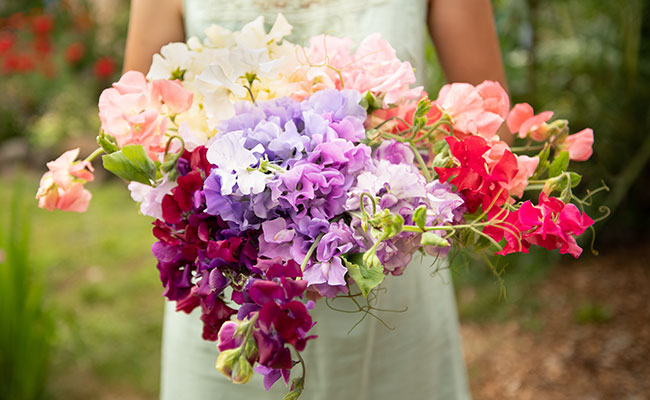
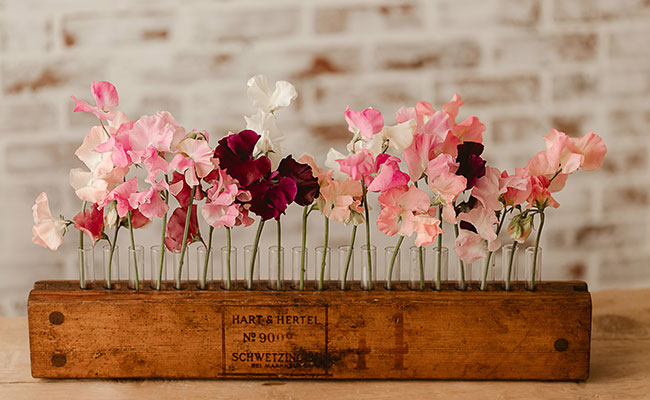
Sweet peas are among the most beloved flowers for floral arranging, prized for their ruffled petals, climbing tendrils, romantic colors, and unforgettable fragrance. Their delicate, airy appearance makes them incredibly versatile in bouquets, whether you are creating loose garden-style arrangements, rustic meadow-inspired bunches, or elegant wedding florals.
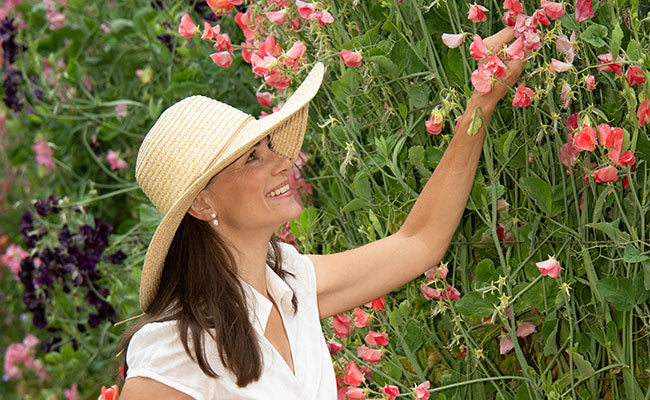
One of the greatest joys of growing sweet peas from seed is bringing armfuls of blooms indoors throughout the summer. Because sweet peas flower continuously when harvested regularly, they pair beautifully with a constantly changing cast of seasonal companions from the cutting garden. Thoughtfully chosen flowers, grasses, foliage, and seedheads can transform a simple bunch of sweet peas into a richly layered, professionally styled arrangement.
If you are planning your own display, explore our sweet pea seed collection to choose varieties for color, fragrance, and vase arrangements.
The Golden Rule of Pairing Sweet Peas
When selecting companion flowers and foliage, the key is balance. Sweet peas have a naturally soft, delicate character, so their companions should complement rather than overpower them. Avoid plants that are excessively tall, heavily scented, or visually dominant, as these can compete with the sweet peas for attention.
Instead, choose companions that provide:
- Contrasting textures
- Structural variation
- Soft movement
- Harmonious or intentionally contrasting colors
- Long vase life
- Delicate or understated fragrance
The best arrangements combine soft rounded blooms with spikes, airy fillers, structural elements, and flowing greenery to create depth and visual interest.
Best Foliage and Greenery for Sweet Pea Arrangements
A beautiful bouquet starts with strong foliage. Greenery provides the framework that supports and highlights the flowers.
Sweet Pea Vines and Tendrils: Do not overlook the sweet pea plant itself. The winged leaves and curling tendrils create wonderfully whimsical filler material that adds movement, softness, and natural structure to arrangements.
Raspberry Greens (Rubus idaeus): Raspberry foliage is one of the most versatile greenery options for cutting gardens. The stems can be harvested throughout much of the growing season and provide soft texture, layered greenery, and excellent volume in bouquets.
Ninebark (Physocarpus opulifolius): Ninebark offers sturdy, architectural branches with leathery foliage that works particularly well in larger arrangements. For best vase performance, wait until the stems harden and the leaves feel firm before harvesting.
Red-Leaf Hibiscus (Hibiscus acetosella): For dramatic contrast, red-leaf hibiscus adds deep burgundy foliage that looks especially striking against pale pink, cream, lavender, or white sweet peas.
Heuchera (Alumroot): Heuchera is invaluable for floral design because of its colorful foliage. Leaves come in shades of silver, terracotta, dark plum, rose, and lime green, adding richness and tonal depth to bouquets even when flowers are absent.
Dusty Miller: Dusty miller contributes silvery foliage that softens brighter color palettes and pairs beautifully with pastel sweet peas.
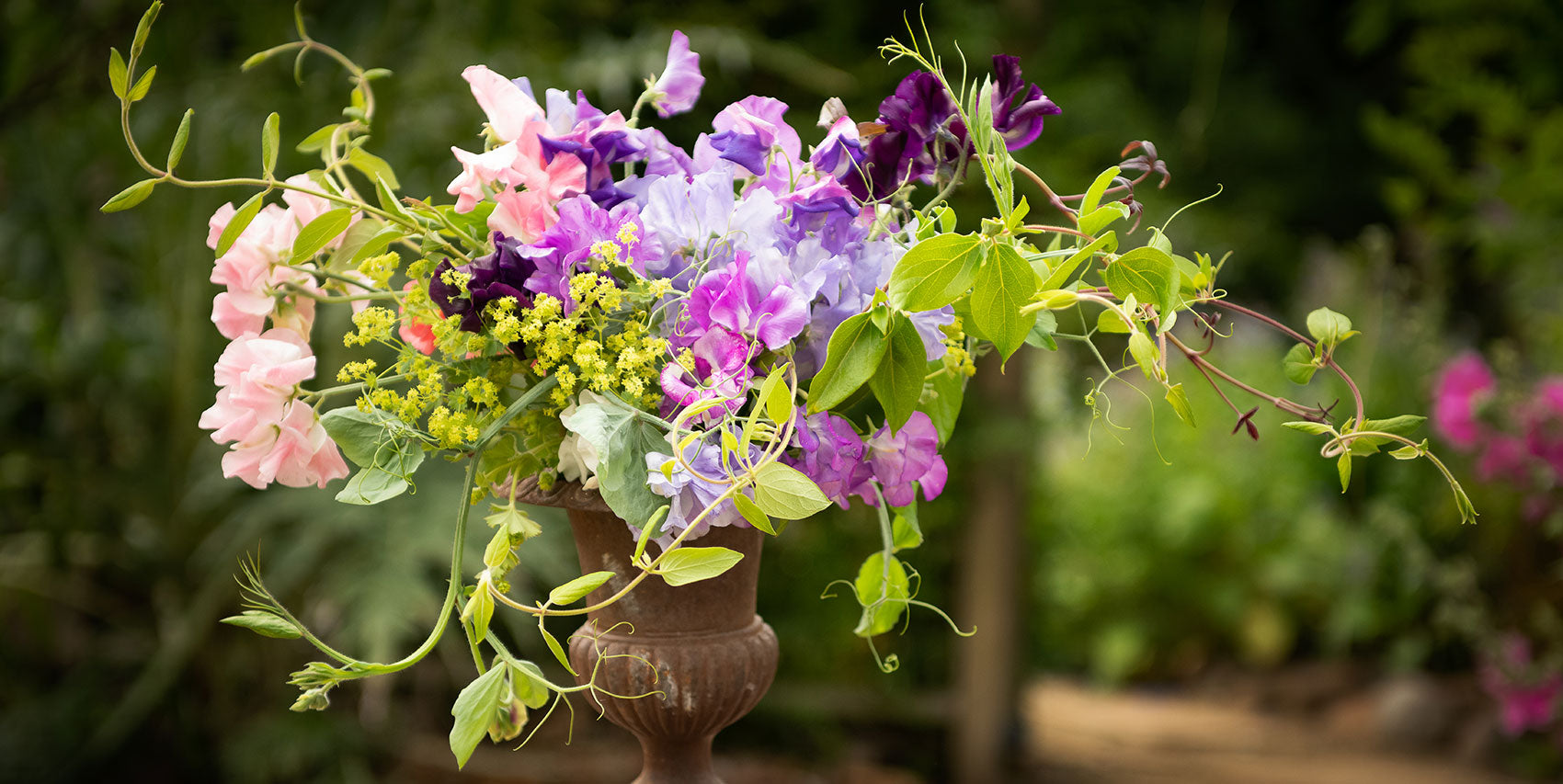
Lady’s Mantle (Alchemilla mollis): Lady’s mantle is a beautiful soft filler for sweet pea arrangements, prized for its frothy chartreuse blooms and scalloped foliage. Its airy texture blends effortlessly between flowers and adds a romantic cottage-garden feel to bouquets.
Best Flower Companions for Sweet Peas
Vertical Spikes for Structure
Sweet peas naturally form clustered, rounded blooms, so adding upright flowers creates essential structural contrast.
Snapdragons (Antirrhinum majus): Snapdragons are among the finest companions for sweet peas. Their tall flower spikes add height, elegance, and architectural form. Available in nearly every color imaginable, they blend seamlessly into both pastel and vibrant arrangements.
Foxgloves: Foxgloves provide dramatic vertical lines and romantic cottage-garden character.
Larkspur: Giant larkspur adds airy height and movement, making arrangements feel fuller and more dynamic while maintaining softness.
Stock (Matthiola): Stock contributes vertical form along with excellent vase longevity.
Airy Fillers and Meadow-Style Flowers
Wild Carrot / Bishop’s Lace (Daucus carota): The lacy umbels of wild carrot bring a romantic meadow aesthetic to bouquets. The cultivar ‘Dara’ is especially prized for its pink-to-burgundy flower heads.
Love-in-a-Mist (Nigella): Nigella offers ferny foliage, delicate blooms, and extraordinary seedpods that remain ornamental long after flowering.
Feverfew (Tanacetum parthenium): Feverfew produces masses of tiny daisy-like blooms that add brightness and softness to bouquets while boasting impressive vase life.
Annual Phlox: Annual phlox varieties such as ‘Crème Brûlée’ provide gentle clusters of blooms that weave beautifully among sweet peas.
Creeping Baby’s Breath: Baby’s breath adds lightness and delicacy while filling gaps naturally throughout arrangements.
Flowers for Texture and Contrast
Sea Holly (Eryngium): Sea holly introduces striking blue spiky flower heads that create dramatic contrast against delicate petals.
Globe Thistle (Echinops bannaticus): The spherical steel-blue flowers of globe thistle provide bold structural contrast and work exceptionally well in modern or meadow-style arrangements.
Scabious (Scabiosa atropurpurea): Scabious produces pincushion-shaped blooms in romantic shades ranging from creamy ivory to deep burgundy-black.
Russian Sage: Russian sage contributes soft silver foliage and airy lavender-blue flower spikes that complement cool-toned sweet peas beautifully.
Cornflowers: Cornflowers provide vibrant blue tones and crisp flower shapes that contrast elegantly with soft sweet pea blooms.
Roses, Peonies, and Larger Statement Flowers
Roses: Sweet peas and roses are a timeless pairing. Small-flowered or cluster-flowering roses such as ‘Mme Plantier’ and ‘Ghislaine de Féligonde’ work particularly well because they echo the delicate scale of sweet peas.
Peonies: Late-flowering peonies overlap beautifully with sweet pea season. Their lush blooms create luxurious arrangements, while their red-toned foliage remains useful even after flowering.
Hydrangeas: Panicle hydrangeas add fullness and drama to larger arrangements while maintaining a soft, romantic character.
Grasses and Wild Elements
Ornamental Grasses: Switch grass (Panicum virgatum), moor grass (Molinia), and other ornamental grasses add softness and swaying movement to arrangements.
Wildflowers and Hedgerow Finds: Cow parsley, ground elder, harebells, wild honeysuckle, and other wild plants contribute airy texture and rustic charm.
Honeysuckle Vines: Wild or garden honeysuckle vines add graceful movement and a relaxed, untamed character to arrangements. Their winding stems and delicate flowers weave naturally through sweet peas, creating a soft meadow-inspired effect.
Seedpods and Dried Materials: Poppy seedpods, montbretia seedheads, dried sorrel, vervain, mullein, and dried raspberry stems add sculptural interest and seasonal texture.
Creating Beautiful Color Harmony
One of the biggest mistakes in arranging sweet peas is mixing too many unrelated colors randomly. While sweet peas naturally blend well together, the most successful arrangements are usually built around a dominant color palette.
- Deep crimson sweet peas softened with blush pink and white
- Lavender and navy tones accented with silver foliage
- Cream and peach varieties paired with dusty greens
- Bold magentas grounded by dark foliage
Choosing one dominant tone and layering complementary shades creates a more intentional, sophisticated arrangement.
Harvesting and Conditioning for Maximum Vase Life
When to Harvest
Always cut flowers during the coolest part of the day, ideally early morning or late evening.
Sweet peas should be harvested when:
- Lower blossoms are open
- Top buds remain closed
This stage ensures the longest vase life.
Conditioning Steps
Immediately after harvesting:
- Strip any foliage below the water line.
- Recut stems at an angle.
- Place stems into clean water or hydrating solution.
- Allow flowers to rest in a cool, dark place for several hours.
This conditioning phase allows flowers to fully hydrate and dramatically improves longevity.
Preventing Bacterial Growth
Leaves submerged in water rot quickly and encourage bacteria, which blocks water uptake. Always remove submerged foliage and refresh vase water regularly.
Designing and Arranging Tips
For more growing advice, variety inspiration, and seasonal guidance, visit the Sweet Pea Library.
Use the Spiral Bouquet Technique: The spiral bouquet method naturally fans flowers outward and creates professional-looking arrangements with excellent balance and movement.
Use Flower Frogs or Chicken Wire: When arranging directly in a vase, reusable mechanics such as flower frogs or chicken wire help hold delicate stems in place naturally.
Keep Arrangements Loose and Natural: Sweet peas are most beautiful when arrangements feel relaxed and garden-inspired rather than stiff or overly formal. Allow tendrils, grasses, and airy fillers to move freely for maximum charm.
Leave a comment
This site is protected by hCaptcha and the hCaptcha Privacy Policy and Terms of Service apply.